

Before Anyone Accuses Me of Taking This Analogy Too Far
I should probably disclose something.
I've actually done this.
I've used Dungeons & Dragons as a group activity with people I was leading. And that wasn't even the most unconventional exercise we did.
On another occasion, after spending an afternoon teaching networking concepts, I had everyone configure the networked, cooperative version of Duke Nukem on their individual work computers.
The assignment was simple enough: make it work.
Of course, making it work required them to understand and apply what we'd just covered. They had to configure their machines, solve problems, and get connected. I didn't need another presentation to determine whether they'd understood the material. The exercise would tell us.
There was also the small matter of getting to play Duke Nukem afterward.
I suspect that particular training exercise would generate a few interesting conversations with today's IT security and HR departments.
But the underlying principle hasn't changed.
People learn differently when they have a meaningful objective, room to experiment, and an opportunity to see the consequences of their decisions. And they often reveal capabilities that would never become apparent in a conventional classroom or staff meeting.
Which brings me back to Dungeons & Dragons.
Because, as it turns out, running a good adventure and leading a good team have rather more in common than most management textbooks would have you believe.
First, a Brief Explanation for the Uninitiated
In Dungeons & Dragons, a group of players inhabits an imaginary world. Each person plays a character with particular strengths, limitations, ambitions, and occasionally questionable judgment. The Dungeon Master, or DM, describes the world, introduces challenges, portrays everyone else, and determines what happens when the players act.
That sounds like an enormous amount of control. It is, in a sense. But a good DM doesn't simply drag the players through a prewritten story while pretending their decisions matter.
Suppose the DM has prepared a dramatic confrontation at a castle. The players, having assessed the situation, decide they'd rather buy the property next door, establish a business, and negotiate with the villain.
An inexperienced DM may try to force everyone back toward the castle. A better DM gets curious about what the players are trying to accomplish and figures out what the world would reasonably do in response.
Congratulations. Your party has discovered management consulting.
The lesson isn't that plans are useless. It's that the plan and the objective are not the same thing.
Setting Direction Is Not Dictating Execution

Organizations frequently say they want initiative, ownership, and innovative thinking. Then they reward people for following a script.
A leader announces the destination, supplies the route, selects the vehicle, and tells everyone which seat to occupy. Later, leadership wonders why nobody took initiative when the road was blocked.
In D&D, that's called railroading. The players can make choices, provided they choose the ones the DM already wrote down.
At work, we usually give it a more respectable name.
Good leadership makes the objective clear, establishes meaningful boundaries, and ensures that people have the information and support to act. It doesn't require the leader to make every decision in advance. Accountability matters, but accountability for outcomes is different from obedience to a preferred method.
Session Zero: The Meeting Everyone Wants to Skip

Many D&D groups begin with a Session Zero. Before the adventure starts, participants discuss what kind of game they want, how they intend to work together, and what expectations or boundaries matter.
It is an unglamorous idea with an excellent return on investment: establish a shared understanding before everyone charges into the dungeon.
Organizations have their own version of Session Zero. Or, more accurately, they have kickoff meetings that could serve that purpose if people used them differently.
Too often, a kickoff consists of slides, a timeline, and a roomful of polite agreement. Everyone leaves with a slightly different understanding of what success means. Those differences don't disappear. They become expensive later.
Real alignment requires more than hearing the same presentation. People need to understand the outcome, their roles, the constraints, and how disagreements will be handled. They need room to ask questions before assumptions harden into commitments.
And alignment isn't a one-time ceremony. A good campaign checks in as the story develops. So should a good initiative.
Your Organizational Chart Is Not Your Character Sheet
One of the interesting things about group activities is how quickly formal titles become less important than what people actually contribute.
The quiet person notices the missing clue. Someone who rarely speaks in meetings becomes the person who can bring competing ideas together. The individual with the grandest title may not be the one best equipped to solve the problem in front of the group.
A tabletop adventure gives those abilities a place to appear. So does a well-designed work exercise.
That doesn't mean organizational roles have no value. They do. But an organizational chart tells you where authority is assigned. It doesn't tell you everything about judgment, resourcefulness, or the ability to help others succeed.
Leaders who create room for people to demonstrate capability learn more about their teams than leaders who rely exclusively on job descriptions and status reports.
The Dice Don't Care About Your Strategic Plan
A DM can prepare thoroughly and still watch the evening unfold in an unexpected direction. The players may misunderstand a clue, make a brilliant choice, or fail at something that seemed straightforward.
The dice add uncertainty. So do customers, markets, technology, dependencies, and the simple fact that other people have their own priorities.
That isn't an argument against planning. It's an argument for planning that survives contact with reality.
When circumstances change, effective leaders don't insist that reality return to the original slide deck. They revisit assumptions, clarify what still matters, and help the team adapt without losing direction.
Sometimes the route changes. Sometimes the destination needs another look. Neither is evidence that leadership has failed.
Don't Wait Until the Campaign Ends to Ask What Went Wrong
Imagine a DM waiting until the end of a yearlong campaign to discover that half the players stopped enjoying themselves months ago.
That would be an impressive commitment to the annual performance review model.
Healthy groups check in. Are people engaged? Does everyone have a chance to contribute? Is the challenge still appropriate? Has something changed that needs attention?
Organizations need the same habit during change, not merely after implementation. A retrospective can be useful, but it is considerably more useful to discover a problem while there's still time to do something about it.
The purpose of feedback isn't to collect sentiment for a dashboard. It's to understand what's happening and respond.
The Dungeon Master Has Power. That's Not the Point.
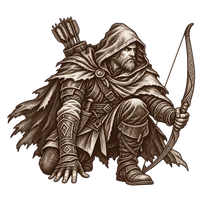
A DM can make the adventure nearly impossible. They can invent an obstacle, overpower a character, or ensure the party loses regardless of its decisions.
They can. But why would anyone want to keep playing?
Leadership also comes with authority. And unlike a voluntary game, work involves livelihoods, obligations, and real consequences. That's precisely why the comparison has limits and why the underlying responsibility matters even more.
A leader's job is not to demonstrate how much control they possess. It is to use authority responsibly: make expectations clear, remove needless obstacles, provide support, and maintain fair boundaries.
The strongest leaders aren't threatened when the team finds a better way. They recognize it as evidence that the environment is working.
The Best Adventures Aren't Written by One Person
The most memorable moments in a tabletop campaign often aren't the ones the DM planned. They're the ones the players created together, within a world that gave their choices meaning.
I see a parallel in organizations. Leaders bring direction, context, judgment, and responsibility. The people doing the work bring knowledge of the work itself, including details that rarely make it into executive presentations.
When those perspectives meet, the result can be better than either side could have designed alone.
That's not abdication. It's shared ownership with clear purpose and sensible constraints.
My old Duke Nukem exercise worked on a smaller scale for the same reason. The objective was concrete. The concepts had been taught. The participants had to make the connections themselves. I could explain networking all afternoon, but their ability to make the game work told me something a multiple-choice quiz might not.
And yes, getting to play was part of the appeal. Learning doesn't become less serious because people enjoy it.
One Final Roll
I was reminded of these experiences by Jeff Randolph's TEDxAvila University talk, Why the best managers play Dungeons & Dragons. His observations about expectations, motivation, agency, and emergent leadership struck a familiar chord.
The specifics of how we teach and lead have changed since my Duke Nukem days. Security policies are different. Technology is different. Workplaces are different.
But the central question is remarkably durable: are we trying to get people to follow our instructions, or are we helping them develop the understanding and judgment to succeed?
Good leaders still need to set direction, make decisions, and take responsibility. Good Dungeon Masters do, too. The difference is that neither should confuse being responsible for the outcome with having to control every move.
After all, if your team can defeat the dragon without following your carefully scripted battle plan, perhaps the real achievement isn't that they followed your leadership.
It's that they didn't need you to tell them how.
Leadership that makes room for judgment
If your organization needs greater clarity, ownership, and practical execution, Peloton Consulting can help turn leadership intent into operating results.
Start a Conversation →